
Between Sessions:
A therapy blog on being human and the contemplative work of psychotherapy
This blog explores anxiety, trauma, and stress through a nervous-system-informed lens — the everyday experience of feeling overwhelmed, disconnected, or stuck, and the slow, meaningful process of finding steadier ground again. Some pieces are written for people who are considering therapy and want a clearer sense of what the work actually feels like: how anxiety shows up in the body, what trauma-informed care means beyond the buzzword, and why chronic stress often needs more than willpower to shift. Others speak to the questions that naturally arise in clinical practice and supervision, written for therapists navigating the art and discipline of this work themselves.
Whether you're exploring therapy for the first time, supporting someone through a difficult season, or working in the field yourself, you'll find reflections here on relationships, attachment patterns, and the whole-person, mind-body approach that shapes how we practice at Vistas.
Whether you're exploring therapy for the first time, supporting someone through a difficult season, or working in the field yourself, you'll find reflections here on relationships, attachment patterns, and the whole-person, mind-body approach that shapes how we practice at Vistas.
For Clients
Articles that explore therapy, relationships, attachment patterns, anxiety, and emotional wellbeing—written for people who are considering therapy or already moving through the therapeutic process and want grounded guidance along the way.


finding the right therapist
Therapy
starting therapy
How to Choose a Therapist: What to Look for When You Don't Know Where to Start
Choosing a therapist can feel overwhelming—especially when you’re not sure what kind of therapy you need. This guide explores what to look for when choosing a therapist, from therapy approaches and credentials to personal preferences, cultural considerations, and the therapeutic relationship. You’ll also learn how to start the conversation without needing to know all the right terminology or therapy acronyms first.
%20better%20res.jpg)
Amanda Carver, R.P., M.Ed., RYT-200, EMDRIA Certified Therapist and Consultant in Training; Clinical Director Vistas Psychotherapy & Wellness
September 10, 2026

anxiety
somatic
Therapy
Why Stress and Anxiety Doesn’t Always Feel Like “Anxiety”
Discover why chronic stress and anxiety don't always feel like worry. Learn why it's hard to relax and how nervous system therapy can help.
Amanda Carver, R.P., M.Ed., RYT-200, EMDRIA Certified Therapist and Consultant in Training; Clinical Director Vistas Psychotherapy & Wellness
August 16, 2026

starting therapy
anxiety
finding the right therapist
somatic
trauma healing
What Is Nervous-System-Informed Therapy? A Body-Aware Approach
What is body-aware, nervous-system-informed somatic therapy? Body-aware, nervous-system-informed therapy is a form of psychotherapy offered at Vistas Psychotherapy & Wellness that pairs talk therapy with gentle attention to the body — breath, sensation, and grounding — using a polyvagal-informed lens. It supports adults navigating anxiety, traumatic stress, chronic stress, panic, or burnout, in-person in Toronto and Ottawa or virtually across Ontario. It stays within the scope of psychotherapy; it does not include formal somatic modalities, bodywork, or touch-based treatment.
Amanda Carver, R.P., M.Ed., RYT-200, EMDRIA Certified Therapist and Consultant in Training; Clinical Director Vistas Psychotherapy & Wellness
July 8, 2026

anxiety
trauma healilng
Therapy
EMDR
What Is EMDR Therapy and How Does It Work? A Simple Guide
Curious about EMDR therapy but unsure what actually happens in a session? This guide offers a clear, grounded introduction to EMDR—what it is, how it works, and what you can expect before, during, and after treatment. You’ll learn how EMDR supports trauma and anxiety, how therapists pace and personalize the process, and why readiness and fit are always considered collaboratively. We also explore common misconceptions, how EMDR relates to body-based and nervous-system work, and what gentle next steps can look like if you’re considering therapy at Vistas Psychotherapy & Wellness in Ontario.
Amanda Carver. R.P., M.Ed., RYT-200, EMDRIA Certified Therapist and Consultant in Training
August 16, 2026

attachment styles
Parenting
Can Smartphone Use Affect Infant Development? What New Research Reveals
Can checking your phone around your baby affect their development? New research suggests that smartphone distractions may interrupt important moments of connection and co-regulation between parents and infants. Learn what the science says, what it doesn't, and why everyday moments of presence matter.

Emilie Verno-Lavigne, B.A.
August 16, 2026

Amanda Carver, Registered Psychotherapist, M.Ed. RYT-200, Clinical Director of Vistas Psychotherapy and Wellness
August 16, 2026

self-talk
Therapy
trauma healilng
Never Too Late
Never Too Late explores the idea that while some opportunities may realistically pass with age, healing and personal change are always possible. Heather reflects on witnessing clients confront painful early-life experiences and the fear that they are “too late” to recover. She shares a personal story about returning to school in her late forties to become a therapist, and challenges cultural timelines that make people feel behind in life. Research on neuroplasticity shows the brain continues to change throughout adulthood, allowing new emotional patterns and perspectives to form. Ultimately, Heather presents that at any stage of life, people can reinterpret their past and choose meaning, growth, and peace.
Heather Lash, R.P. Qualifying
April 1, 2026

Inner child healing
Therapy
trauma
Meeting Your Inner Child: What It Is, Why It Matters, and How to Begin Healing
Your inner child represents the emotional patterns, attachment wounds, and survival strategies formed in childhood that still influence your reactions today. When you experience emotions that feel bigger than the moment, it may be a younger part of you seeking safety, validation, or care. Inner child healing involves recognizing these patterns with compassion, grieving unmet needs, and learning to respond to yourself in nurturing ways. Over time, this work helps you break repetitive cycles, build self-trust, and become the safe, supportive presence you may not have had growing up.
.jpg)
Sandra Gautreau, R.P.
June 14, 2026
Therapy
anxiety
self-talk
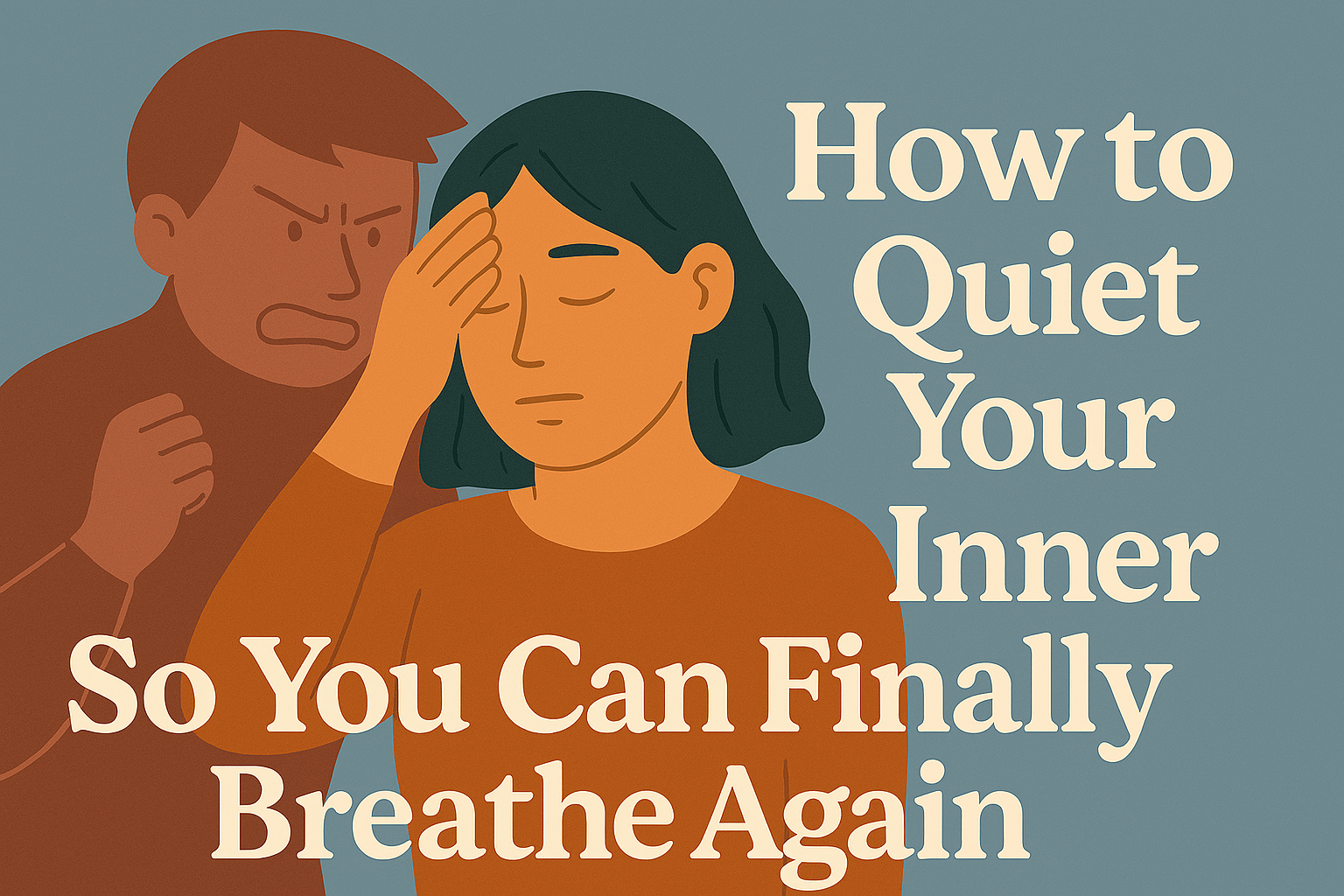
Inner Critic: Why It Gets So Loud and How to Calm It
A quick, psychology‑backed guide to spotting your inner critic and shifting into self‑compassion. Learn the signs, understand what this voice is trying to protect, and discover simple strategies to quiet self‑criticism and build a kinder inner dialogue.

Amanda Carver, Registered Psychotherapist, M.Ed. RYT-200, Clinical Director of Vistas Psychotherapy & Wellness
August 16, 2026

trauma healing
people pleasing
conflict resolution
Parentified and People Pleasing: When “Perfect” Feels Like the Only Way to Handle Conflict
How childhood roles shape adult conflict — this article explores what happens when growing up in a parentified role teaches us to avoid mistakes, rehearse every word, and strive for flawless communication. As adults, those survival strategies often turn into relational perfectionism: over‑preparing, silencing needs, and fearing conflict itself. This post debunks the myth of “perfect communication” and shows what to do instead — learning to be present, imperfect, and willing to repair. Readers will discover practical tools for naming needs, setting boundaries, and tolerating discomfort so that conflict becomes a process of connection rather than a performance of control. Keywords:
- relational perfectionism
- parentified child
- childhood roles and conflict
- conflict avoidance
- people‑pleasing
- overfunctioning in relationships
- myth of perfect communication
- healthy conflict skills
- emotional repair

Sandra Gautreau, R.P.
April 1, 2026

Therapy
trauma
trauma healilng
Are We Traumatized or Something Else? Rethinking How We Talk About Trauma
Are we "traumatized" or hurting in ways that need better language? Explore the difference between Big T and Little T trauma and tools to widen your window of tolerance.
.jpeg)
Alessandra Inocencio
June 14, 2026

Therapy
attachment styles
Attachment Styles in Dating: Your Nervous System’s Relationship Script
Why We Fight, Flirt, and Fear — Attachment Styles Explained Ever wonder why some people crave closeness while others pull away during conflict? This post explores how our early relationships may shape the way we connect, communicate, and cope in adult romantic partnerships and influence relationship patterns. From secure to anxious, avoidant, and beyond, we unpack the origins of attachment styles and how they show up in everyday relational dynamics. You’ll learn: - Where attachment theory comes from and why it matters.
- How different styles handle conflict and vulnerability
- What it means to move from insecure to secure attachment
Alessandra Inocencio, 3rd Year Carleton Practicum Student
August 31, 2026
Therapy
starting therapy
finding the right therapist
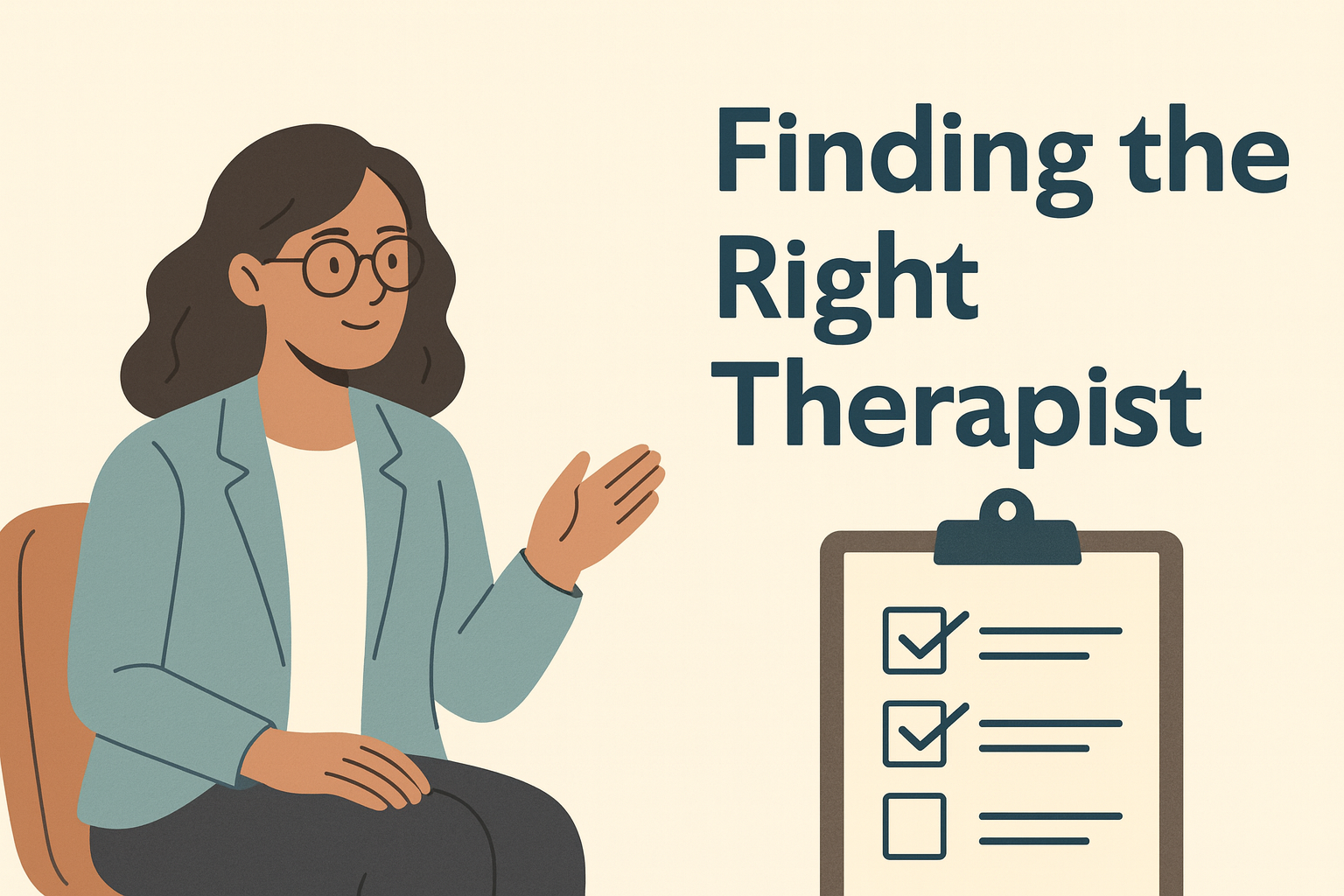
How to Find the Right Therapist: Understanding the Therapeutic Alliance
Starting therapy can feel a lot like dating — finding the right fit matters. This post explores why a strong therapeutic alliance is essential, what to look for in a therapist, and how cultural connection, therapy styles, and personal comfort all play a role. You’ll learn practical questions to ask yourself, red flags to watch for, and myths to bust along the way. Whether you’re seeking support for trauma, anxiety, or self‑growth, this guide empowers you to trust your intuition and keep searching until you find the therapist who helps you feel safe enough to grow.
Alessandra Inocencio, 3rd Year Carleton Practicum Student
August 31, 2026

Therapy
starting therapy
finding the right therapist
Why Therapist Profiles All Sound the Same (And How to Choose the Right Therapist)
Because sometimes, the best way to find your voice… is to laugh at the ones we all keep copying.

Amanda Carver, R.P., M.Ed., EMDRIA Certified Therapist, RYT-200
March 11, 2026
Therapy
starting therapy
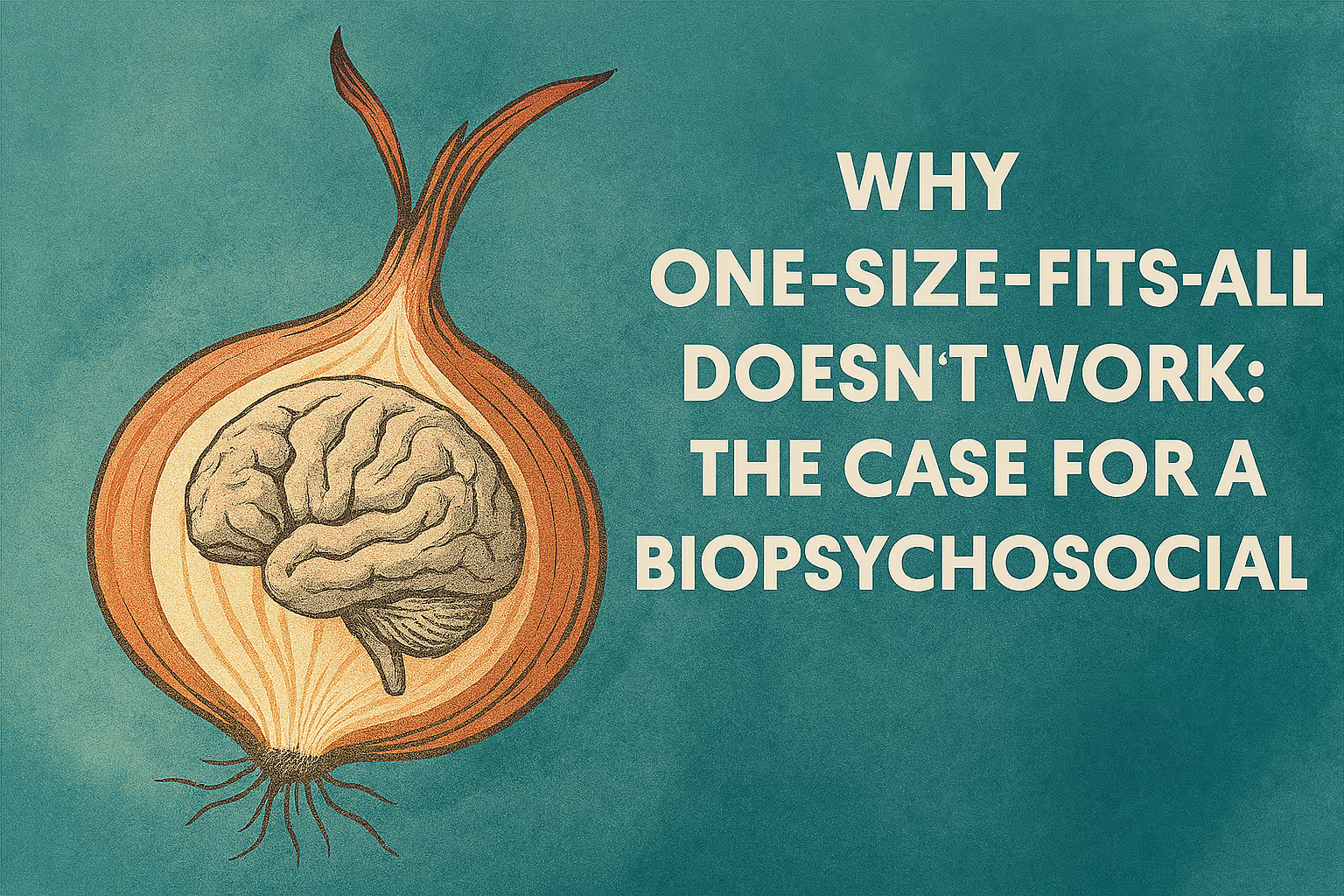
Why One-Size-Fits-All Doesn’t Work: The Case for a Biopsychosocial Perspective on Anxiety
This insightful student-written post challenges the limitations of the biomedical model in treating anxiety, advocating instead for a biopsychosocial approach that considers biological, psychological, and social factors. Through clear examples and accessible language, it explores how integrative care — including CBT, EMDR, medication, and lifestyle supports — can better meet the diverse needs of individuals. A must-read for anyone seeking a more personalized, holistic understanding of mental health.

Sadie Dutchyn, Psychology Practicum BA Student
July 7, 2026

Therapy
attachment styles
addictions
Beneath the Surface: How Attachment Styles Shape Addiction
Attachment formed in early childhood shapes lifelong emotional patterns, and insecure attachment can increase vulnerability to addictions, including problematic social media use.

Rheanna Armstrong
March 11, 2026
For Therapists
Reflections on psychotherapy practice, clinical supervision, therapist self‑reflection, and the lived complexities of therapeutic work—written as a space where therapists can slow down, listen inward, and draw on both intuition and community wisdom as they navigate the art and discipline of the therapeutic conversation.

Clinical Supervision
therapist skill development
Therapist Authenticity
Imposter Syndrome
When "Enough" Feels Elusive: Why Therapists Live With More Questions Than Answers
Therapist self-doubt isn't a sign of incompetence — it's often a sign of ethical, reflective practice. A look at why "enough" feels so hard to measure in this work.
Amanda Carver, R.P., M.Ed., RYT-200, EMDRIA Certified Therapist and Consultant in Training; Clinical Director Vistas Psychotherapy & Wellness
August 31, 2026

Parenting
Yoga
LGBTQ2S+ Affirming
Gender-Inclusive Yoga and Parenting Out Loud: My Conversation on Live Your Yoga
Amanda Carver, Clinical Director of Vistas Psychotherapy & Wellness, joins the Live Your Yoga podcast to discuss gender-inclusive yoga practices and the personal experience of raising a transgender child. A candid conversation on inclusion, language, and creating safer spaces on and off the mat. Listen to the full episode.
Amanda Carver, M.Ed., RP, RYT-200, EMDRIA Certified Therapist & Approved Consultant in Training — Clinical Director, Vistas Psychotherapy & Wellness
August 31, 2026

Administration
anxiety
Therapy
Finances
Money's Funny
Money can feel surprisingly complicated—especially in therapy. Our beliefs about money are shaped by culture, family, and past experiences, often linking it to ideas of worth, care, or power. Because therapy is deeply relational, paying for it can stir emotions for both clients and therapists. Yet the financial exchange serves an important purpose: it protects clear boundaries and ensures the therapeutic relationship remains focused entirely on the client’s needs. Rather than diminishing care, it allows therapists to bring their full presence, training, and attention to the work. When money is discussed openly and without shame, it becomes part of a transparent and respectful therapeutic process.
Heather Lash, R.P. Qualifying
March 29, 2026

Clinical Supervision
therapist skill development
Therapist Imposter Syndrome: How to Quiet Your Inner Critic in Clinical Work
Most therapists leave the room at least once a week feeling like a fraud. We compare our "messy" sessions to the neat, 10-session arcs found in textbooks and wonder: Am I even helping? This article explores why that Inner Critic is actually a misguided protector—and why the moments we dismiss as "just talking" are often the most therapeutic parts of the job. Key Takeaways:
The Nonlinear Reality: Change happens beneath the surface. Just because a client repeats a pattern doesn't mean you've failed; it means they are human.
Supportive Counselling is "The Work": We debunk the myth that structured modalities (like CBT or ACT) are the only "real" therapy. Grounded presence and emotional validation are the foundations that make specialized interventions possible.
Reframing the Critic: Your imposter syndrome is a "protective part" trying to keep you safe in the face of clinical ambiguity. Learn to soften its message into a tool for ethical conscientiousness rather than a source of shame.
The Power of Presence: Clients rarely remember your perfect intervention; they remember how you made them feel when they were at their most vulnerable. The Bottom Line: You don't need to be a technician to be a healer. By integrating your inner critic and trusting the therapeutic relationship, you move from being a "perfectionist performer" to a grounded, effective clinician.
Amanda Carver, R.P, M.Ed., RYT-200
September 10, 2026

Clinical Supervision
therapist skill development
Therapist Authenticity
Trust the Research, But Trust the Client More: Rethinking Psychotherapy’s Evidence Bias
Evidence‑based therapies like CBT dominate modern psychology, but real clients rarely fit neatly into research protocols. This article explores the core dilemma psychotherapists face: balancing scientific validity with the complexity of individual human experience. Drawing on Jung, contemporary research, and clinical realities, it argues for a more flexible, integrative approach — one where therapists trust the evidence, but trust the client even more.
Emilie Verno-Lavigne
July 7, 2026

Clinical Supervision
Administration
Standards of Practice
Can Ontario Therapists Practice in BC? Cross-Border Rules, Risks & What to Know
Cross‑Border Therapy in Canada: What Ontario Clinicians Need to Know
Navigating cross‑border therapy as an Ontario clinician can feel overwhelming — especially as clients travel, relocate, or work remotely across provinces and countries. This comprehensive guide breaks down the essential rules, risks, and documentation requirements for providing virtual care when clients are outside Ontario. You’ll learn how licensing regulations work across Canadian provinces, what to consider when supporting clients in the United States or abroad, and how to build a clear, ethical workflow that protects both you and your clients. Whether you’re a solo practitioner, supervisor, or clinic leader, this post offers practical steps, therapist‑friendly explanations, and up‑to‑date guidance to help you deliver safe, compliant, and compassionate care across borders. Keywords: cross‑border therapy Canada, Ontario therapist regulations, virtual therapy across provinces, interjurisdictional practice, online counselling rules Canada, therapy licensing across borders, continuity of care virtual therapy, Canadian psychotherapy regulations.
Amanda Carver, M.Ed., RP, RYT-200, EMDRIA Certified Therapist & Approved Consultant in Training — Clinical Director, Vistas Psychotherapy & Wellness
August 31, 2026

Clinical Supervision
Administration
Standards of Practice
So, You've Been Asked to Write a Letter
Wondering what to do when a client asks for a letter? This guide walks Registered Psychotherapists through the ethical, clinical, and documentation considerations of letter writing. Learn how to stay within CRPO scope, assess competence, obtain informed consent, and avoid common pitfalls. Includes tone tips, formatting advice, and downloadable resources to support supervisees and new therapists.
Keywords:
- Registered Psychotherapist letter writing
- CRPO documentation standards
- therapist letter template
- informed consent psychotherapy
- clinical documentation tips
- psychotherapy scope of practice
- therapist support letters
- supervision resources for RPs
Amanda Carver, M.Ed., RP, RYT-200, EMDRIA Certified Therapist & Approved Consultant in Training — Clinical Director, Vistas Psychotherapy & Wellness
August 31, 2026
Clinical Supervision
therapist skill development
Therapist Authenticity
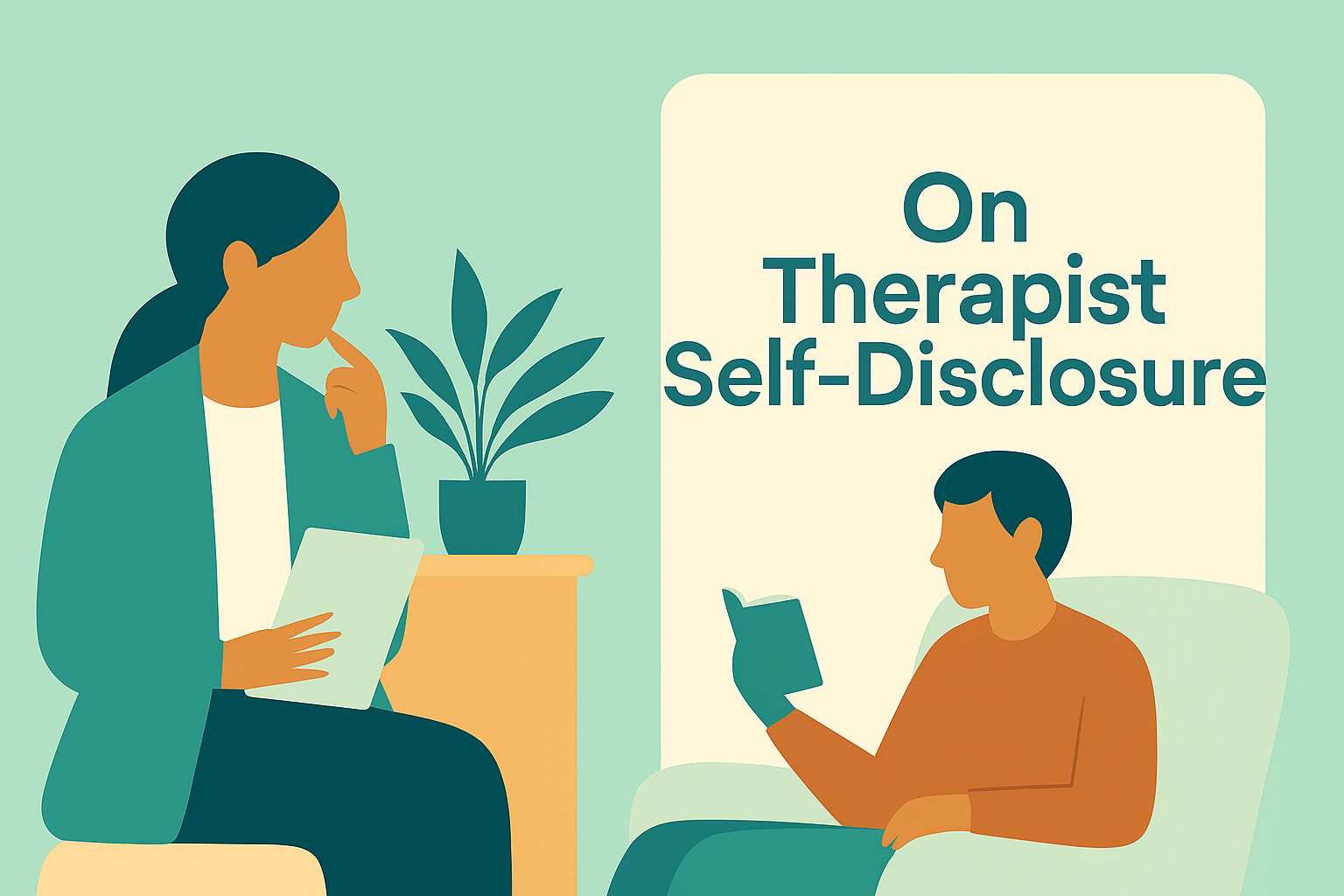
Therapist Self-Disclosure: Authenticity Without Oversharing in Therapy
Therapist self-disclosure is one of the most nuanced skills in psychotherapy. While authenticity helps build trust and strengthen the therapeutic relationship, sharing too much personal information can unintentionally shift the focus away from the client. For newer therapists especially, the line between being genuine and becoming autobiographical can feel difficult to navigate. This article explores the difference between authentic presence and personal storytelling in therapy, and why thoughtful restraint is often just as important as connection. Drawing on clinical experience and psychotherapy research, it examines how self-disclosure can either support the therapeutic alliance or blur professional boundaries depending on timing, motivation, and relevance. You’ll learn why self-disclosure is often considered an advanced clinical skill, how to evaluate when sharing may benefit a client, and how to maintain the therapeutic frame while still showing up as a real human being in the room. The article also outlines practical guidelines for intentional, client-centered disclosure and summarizes key research findings on how therapist self-disclosure affects trust, rapport, and therapy outcomes. Whether you are a therapist in training, an early-career clinician, or simply curious about how therapy works behind the scenes, this reflection offers a thoughtful look at one of psychotherapy’s most subtle relational tools.

Amanda Carver, M.Ed., RP, RYT-200, EMDRIA Certified Therapist & Approved Consultant in Training — Clinical Director, Vistas Psychotherapy & Wellness
August 31, 2026
Therapy
Therapist Authenticity
therapist skill development
Clinical Supervision
Self-Care Tips for Therapists You Actually Need
Self-Care is More Than Bubble Baths: It's Sustainable Practice. Therapists, we're tired of the fluff. True self-care is less about self-indulgence and more about the difficult, crucial work of self-parenting and professional accountability. This includes mastering administrative essentials like case note strategy to eliminate chronic stress, embracing the moral complexity of the work to prevent despair, and establishing clear rituals for leaving work at the office. Furthermore, sustainable practice requires building a supportive community, making Imposter Syndrome an ethical ally, and carefully vetting contracts to avoid predatory clinic models. You don't have to navigate the isolation and complexity alone; finding a supervisor you truly connect with is often the most powerful form of self-care.

Amanda Carver, M.Ed., RP, RYT-200, EMDRIA Certified Therapist & Approved Consultant in Training — Clinical Director, Vistas Psychotherapy & Wellness
August 31, 2026
Start Your Journey
Your next step in your wellness journey starts here