

Trust the Research, But Trust the Client More: Rethinking Psychotherapy’s Evidence Bias

Evidence Based Therapy vs Integrative Therapy: A Psychotherapists Dilemma

What Is Evidence-Based Therapy?
In recent years, evidence‑based approaches have taken the spotlight in psychotherapy, and for good reason: they are consistently described in research as among the safest, most reliable, flexible, and cost‑effective interventions available. For example, cognitive‑behavioural therapy (CBT) is one of the most widely studied evidence‑based practices. A recent meta‑analysis of 409 clinical trials on CBT for depression found a moderate‑to‑large effect size (g = .79), meaning that, on average, clients receiving CBT tended to show better outcomes than those in control conditions (Cuijpers et al., 2023). With findings like these, the appeal of evidence‑based therapies seems straightforward — not only because of their demonstrated effectiveness, but also because they offer the kind of scientific validation the field of psychology has long sought
During my undergraduate psychology training, I often felt frustrated by older, less empirically measurable approaches. They were presented as fascinating but ultimately too complex or subjective to be considered “scientific.” They lacked the empirical rigour that evidence‑based practices provide. Yet many psychotherapists continue to use these approaches (and their contemporary variants) in practice (Cook et al., 2017). The divide between research — which often favours cognitive‑behavioural methods — and clinical practice — which frequently integrates existential, interpersonal, or psychodynamic elements — has long intrigued me.
This divide highlights a fundamental dilemma in psychological science: individual human behaviour does not always lend itself neatly to scientific measurement. What works for the “average” participant in randomized controlled trials may not translate directly to the individual sitting across from a therapist. This is where less empirically standardized approaches may offer something valuable. Carl Jung identified this tension nearly a century ago in The Undiscovered Self:
“Judged scientifically, the individual is nothing but a unit which repeats itself ad infinitum and could just as well be designated with a letter of the alphabet. For understanding, on the other hand, it is just the unique individual human being who, when stripped of all those conformities and regularities so dear to the heart of the scientist, is the supreme and only real object of investigation.”
— Jung, 1958, p. 6
Jung uses the language of his time, referring to the client as a “sick person,” though contemporary practice uses more person‑centred terminology. His point remains relevant: individual persons cannot be fully understood through generalizations alone, because each person is an exception to the norm.
This leads to another dilemma, which Jung also articulated:
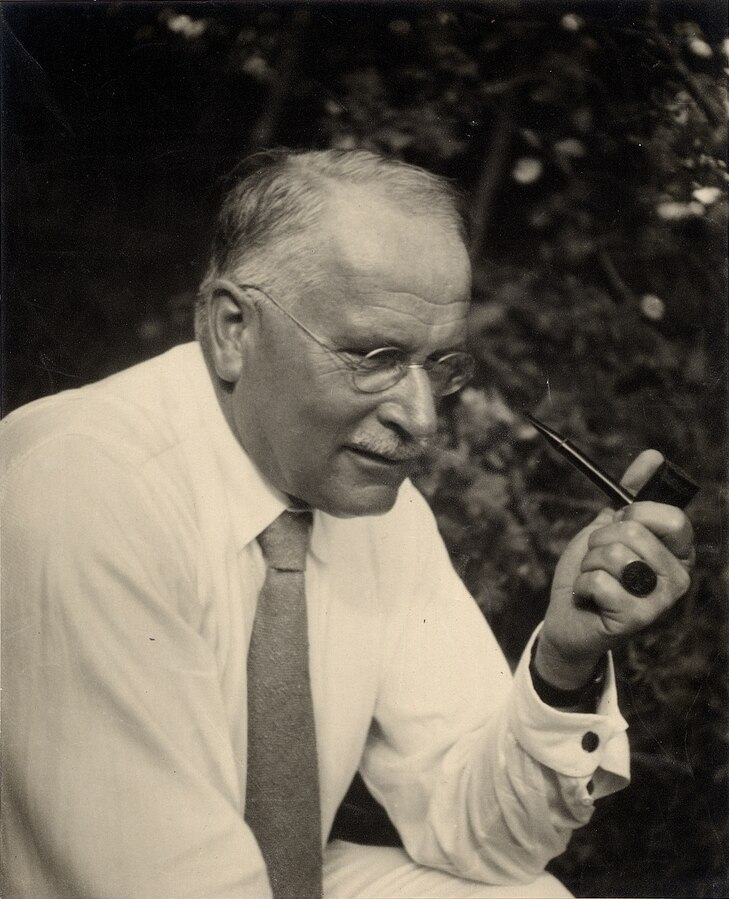
“On the one hand, he [the psychotherapist] is equipped with the statistical truths of his scientific training, and on the other, he is faced with the task of treating a sick person who, especially in the case of psychic suffering, requires individual understanding.” Jung, 1958, p. 6
Psychotherapists must recognize that individual clients often require individualized approaches. Evidence‑based methods provide powerful tools, but no single treatment fits every situation. Many cases call for flexibility — a willingness to integrate methods in order to meet the needs of the person in front of us.
Despite this, In some training contexts, this tension may receive less emphasis. Students learn about the effectiveness of evidence‑based practices, but they are not always encouraged to explore why these approaches may be better suited to treating groups rather than individuals — a focus that older, more holistic traditions emphasized. While standardized protocols are often prioritized in institutional settings due to their scalability and ease of measurement, the 'deep work' of psychodynamic and humanistic traditions remains a cornerstone for many private practitioners. They are often more time‑intensive, more difficult to operationalize, and harder to measure in randomized trials. By contrast, standardized protocols like CBT offer efficiency, structure, and a reassuring sense of scientific legitimacy.
Why Evidence-Based Approaches Like CBT Are Widely Used
CBT’s core principle is relatively easy to operationalize: maladaptive thoughts and beliefs contribute to distress, and cognitive restructuring can help clients think about problems in more adaptive ways. In other words, the success of this approach depends on the extent to which clients can learn to “think different thoughts.” Yet this method may overlook inner complexities by not fully addressing the unique origins of a client’s distress. Engaging in Socratic dialogue may be statistically effective for the “average” participant, but may feel insufficient or mismatched for an individual struggling with deeply rooted emotional turmoil. While early iterations of CBT focused heavily on cognitive restructuring, modern evidence-based care increasingly recognizes that the 'how' of therapy—the relationship and the individual's history—is just as vital as the 'what'.
Even the science itself is more fragile than it sometimes appears. The criteria for what counts as “evidence‑based” are debated, and many studies rely on control conditions that do not resemble real‑world practice (Cook et al., 2017). Mechanisms of change remain unclear, and what appears statistically significant may not always be clinically meaningful. While evidence-based approaches remain the foundation of ethical and effective care, there is ongoing discussion in the field about how best to apply research findings to individual clients
The Limits of One-Size-Fits-All Therapy
To bridge this gap, practitioners must look beyond simple checklists and embrace a more holistic framework. Many frameworks describe Evidence-Based Practice as Evidence-Based Practice (EBP) is a three-legged stool: it requires the best available research, the therapist’s clinical expertise, and—crucially—the client’s unique values and culture. Without any one of these supports, the therapeutic process risks becoming either an impersonal application of data or an ungrounded exercise in intuition. By treating the client's lived experience as an equal partner to the literature, the therapist ensures that the intervention is not just scientifically valid, but personally relevant.

Psychotherapists, then, must apply evidence‑based approaches with thoughtful discretion. These methods provide a strong foundation, but clients bring distinct histories, contradictions, and needs. The therapeutic relationship — which research consistently identifies as central to meaningful change — flourishes when the client’s strengths, creativity, and preferences are understood and incorporated. The challenge for psychotherapists is to balance scientific integrity with the individuality of their clients, while remaining open to insights from other traditions when evidence‑based approaches do not fully address the complexity of a case. In practice, this means integrating research evidence with clinical judgment and careful attention to the individual client, remaining deeply attuned to the person in front of us.
The Integrative Therapy: Bridging the Divide
What is Integrative Psychotherapy?
Integrative psychotherapy is an approach to mental health care that blends tools from different therapeutic schools—such as CBT, psychodynamic, and humanistic therapy—to fit the specific needs of the individual. Rather than a "one-size-fits-all" protocol, it prioritizes the therapeutic relationship and the client's unique history alongside gold-standard scientific research.
Balancing Research and Individual Needs in Therapy
By working integratively, we move past the "CBT vs. Jung" debate. We recognize that evidence-based methods provide a powerful foundation, but they are most effective when applied with the flexibility to meet a client's distinct history, contradictions, and needs.
We also welcome you to read more about Vistas' approach to CBT here.
Director’s Note: At Vistas, we view research as a compass that guides clinical decision-making, while remaining responsive to the individual client. As Emilie explores here, our goal is to honor the gold-standard science of our field while never losing sight of the unique, unrepeatable human being sitting across from us. — Amanda Carver, M.Ed, RP
Important Note
This content is for general educational purposes and is written for therapists early in their careers. It is not therapy, clinical guidance, or professional supervision, and it does not establish a therapeutic, supervisory, or consultative relationship. If you’re experiencing distress, please reach out to a qualified mental‑health professional. If you are in immediate distress or at risk of harm, in Canada you can call or text 9‑8‑8 or call 9‑1‑1; internationally, visit FindAHelpline.com for free, confidential support in your region.
Written by a student contributor and reviewed by a Registered Psychotherapist.
Frequently Asked Questions
What is evidence-based therapy?
Evidence-based therapy refers to treatments that are supported by scientific research, such as cognitive behavioural therapy (CBT).
What is integrative psychotherapy?
Integrative psychotherapy combines techniques from different therapeutic approaches to meet the individual needs of the client.
Is CBT the best therapy?
CBT is one of the most researched therapies, but it may not be the best fit for every individual. Many therapists use integrative approaches.
Why do therapists use different approaches?
Because individuals vary, therapists often adapt methods to fit each person’s history, preferences, and goals.
References
Jung, C. G. (1958). The undiscovered self. Little, Brown.
Cook, S. C., Schwartz, A. C., & Kaslow, N. J. (2017). Evidence-Based Psychotherapy: Advantages and Challenges.
Neurotherapeutics: The journal of the American Society for Experimental NeuroTherapeutics, 14(3), 537–545. https://doi.org/10.1007/s13311-017-0549-4
Cuijpers, P., Miguel, C., Harrer, M., Plessen, C. Y., Ciharova, M., Ebert, D., & Karyotaki, E. (2023). Cognitive behavior therapy vs.
control conditions, other psychotherapies, pharmacotherapies and combined treatment for depression: a comprehensive
meta-analysis including 409 trials with 52,702 patients. World psychiatry: Official journal of the World Psychiatric Association
(WPA), 22(1), 105–115. https://doi.org/10.1002/wps.21069
Sackett, D. L., Rosenberg, W. M., Gray, J. A., Haynes, R. B., & Richardson, W. S. (1996). Evidence based medicine: What it is and what it isn't. BMJ, 312(7023), 71–72. https://doi.org/10.1136/bmj.312.7023.71