

Therapy for First Nations, Inuit, and Métis Clients

The short version: Vistas Psychotherapy & Wellness offers mind-body psychotherapy for First Nations, Inuit, and Métis clients, in person in Toronto and Ottawa and virtually anywhere in Ontario. Our team includes an Indigenous psychotherapist, and two of our clinicians are registered to direct bill Non-Insured Health Benefits (NIHB) and the Indian Residential Schools Resolution Health Support Program (IRS RHSP). You set the pace, and your culture, relationships, and choices lead.
Finding a therapist shouldn't be the hardest part of getting support. For many First Nations, Inuit, and Métis people, it can be: searching for someone enrolled with NIHB, wondering whether they'll understand, and bracing to explain history before you can even get to what brought you in.
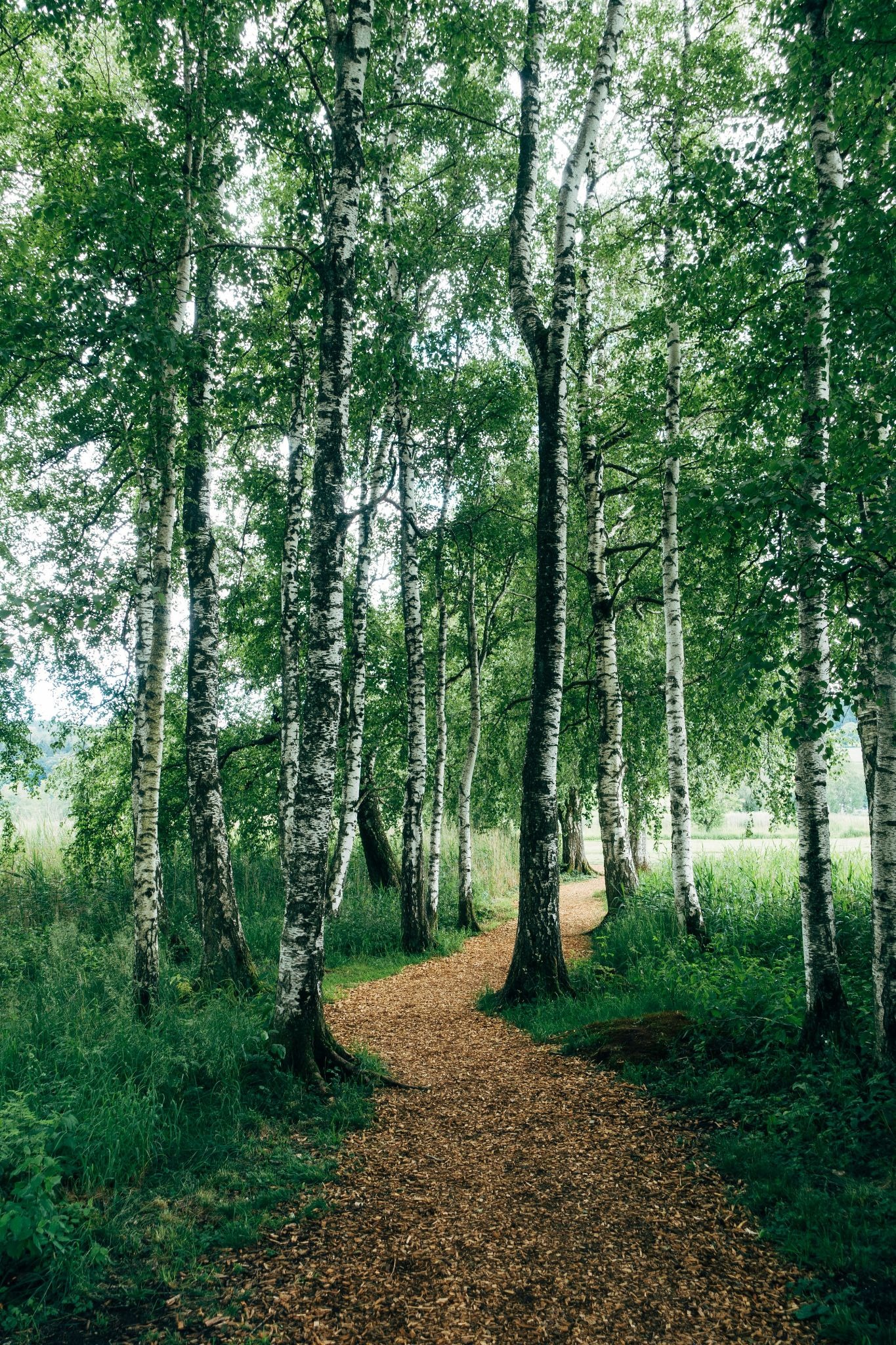
You shouldn't have to do that work first. Healing rarely runs in a straight line anyway. It's more like a trail than a staircase, with switchbacks, and lookouts where you can catch your breath. And you're not walking it alone. Those who came before you made tracks in the snow, or tied small markers to the trees, so you could find your way. They're still watching out for you. You set the pace, and we walk alongside you.
At Vistas, our Registered Psychotherapists offer mind-body psychotherapy for Indigenous clients. We see clients in person in Toronto and Ottawa and virtually anywhere in Ontario.
What you can expect here
You won't have to teach us history. We do our own learning about colonization, residential and day schools, and how their impacts continue today, including child welfare involvement, missing and murdered relatives, and over-incarceration. Your session time stays yours.
You don't need a "big" reason to come. Work stress, a breakup, parenting, grief, sleep, burnout, or just needing to talk something through are all reasons enough. Not every session has to be about history or identity, unless you want it to be.
We won't assume. There is no single Indigenous culture. First Nations, Inuit, and Métis peoples, and the many Nations and communities within them, have distinct languages, teachings, and histories. Whether you're deeply connected to community, reconnecting, or somewhere in between, we'll ask rather than guess.
Strength belongs in the room too. Being Indigenous isn't a trauma story. Love, strength, humour, and wisdom get passed down through the generations too, along with family, language, land, creativity, and resurgence. Therapy can support all of it.
Finding NIHB care shouldn't be a hunt. Two of our clinicians are registered NIHB providers and can direct bill, so you can spend your energy on what matters to you, not the paperwork.
One nervous system, shaped in relationship
Our approach rests on a simple idea: we have one nervous system, and the brain is part of it. What happens in the mind shows up in the body, and that whole system is shaped in relationship, with family, community, land, and history.
So therapy here works from both directions. Top-down, through conversation, meaning, and reflection. Bottom-up, through gentle, body-aware, nervous-system-informed practices. Neither one is the "real" therapy. They work together.
Who you'll work with
Our team includes Heather Lash, RP (Qualifying), a psychotherapist of mixed Saulteaux and Red River Métis heritage from Treaty 2 in Manitoba, whose relational, story-based approach is rooted in Indigenous tradition. Heather practises under clinical supervision while completing her full registration. You can read more about Heather.
Amanda Carver, RP, Clinical Director, has worked alongside Indigenous clients and communities for 17 years, always by invitation. She has served on the leadership team of the Canadian Counselling and Psychotherapy Association's Indigenous Circle chapter for more than five years where she is continuously learning and listening.
Sandra Gautreau, RP, has completed University of Calgary coursework on Indigenous history and practises under Amanda's clinical supervision, with Heather available for consultation. Amanda and Sandra are both registered NIHB providers.
Whoever you see, you're the expert on your own culture, history, and experience. Our job is to listen, learn, and follow your lead.
Who this may support
People come to us for all the reasons anyone looks for therapy: anxiety, burnout, relationships, grief, and big life changes. Some also want space to work with intergenerational trauma, identity, or reconnecting with community and culture. For some, the body stays switched "on" even when the mind knows things are okay. For others, it's closer to shutdown: heavy, flat, far away.
Healing from intergenerational trauma takes more than one generation, and you don't have to carry all of it. We often hear about caring for the seven generations to come. You are also one of the generations your ancestors were caring for. Even small steps, a little at a time, are part of that longer path, and you're a part of it.
We use a somatic-informed lens to understand how the body and nervous system may respond to stress, while keeping choice and pacing central. You're welcome to request an Indigenous therapist or a culturally attuned therapist if that feels important for your comfort or connection.
What this care may include
Sessions pair talk therapy with gentle, body-aware, sensory-based, and yoga-informed practices. We do not offer formal somatic modalities, bodywork, or touch-based interventions. EMDR may be explored when appropriate, with readiness assessed together.
We approach this work with cultural humility: staying curious, being honest about the limits of what we know, and welcoming correction. Cultural humility means we honour your autonomy and your relationships, your family, community ties, and the knowledge systems that support you, if and when you choose to bring them in.
You can bring teachings, ceremony, or practices that matter to you. Or you can keep the focus on what's happening right now. Either way, your choice leads.
Walk-and-talk sessions. If sitting in an office isn't your style, Heather offers walk-and-talk therapy in downtown Toronto, along the water or in local parks. Some people find it easier to talk side by side, outdoors, and on the move. We'll talk through privacy and comfort together before you head out.
What a first session may feel like
A first session is mostly a conversation. We'll talk about what brings you in, what support you already have, what you'd like to be different, and how you'd like us to work together.
If it feels right, we might try something small, such as noticing one colour in the room or feeling the chair holding you up. If anything doesn't sit right, skip it. That's useful information too. Nobody hands out gold stars for powering through. Slow is a perfectly respectable speed.
How we work with the nervous system
Stress, grief, and trauma can keep the body braced: tight shoulders, shallow breath, a mind that won't settle. Our approach draws on ideas from Polyvagal Theory. It's an influential framework, though some of its claims are still debated in the research. In practice, that means paying attention to breath, orienting to the space around you, small movements, and brief sensory practices, like resting a hand on your chest or looking toward the farthest point you can see, a window or the sky, and letting your gaze soften.
We don't push for change. We build in lookouts along the way: moments to pause, settle, and take in the view before going further.
Between sessions, small still counts. If you'd like help building a practice of your own, our mindfulness and meditation coaching is available as a separate service from psychotherapy.
Access, fees, and NIHB billing
Support should be within reach. Amanda Carver and Sandra Gautreau are registered providers and can direct bill:
- Non-Insured Health Benefits (NIHB) mental health counselling, for eligible First Nations and Inuit clients
- Indian Residential Schools Resolution Health Support Program (IRS RHSP), for Survivors and their family members
We can also help you explore whether the Missing and Murdered Indigenous Women and Girls (MMIWG) or Federal Indian Day Schools support programs may apply to you. Private pay and extended health benefits are options too, and we're happy to walk through coverage with you. Our billing page has more detail.
Fees typically range from about $100 to $175 per session, and limited sliding-scale spaces may be available. See Services and Fees.
Where we meet
- In person in Toronto and Ottawa, by appointment
- Walk-and-talk sessions with Heather in downtown Toronto
- Virtually anywhere in Ontario
If you live in a smaller or northern community, or travel is a barrier, virtual sessions mean we can start from your kitchen table.
Common questions
How do I find an Indigenous therapist in Toronto? It's okay to ask a practice directly whether they have Indigenous clinicians and how they approach cultural humility and safety. At Vistas, Heather Lash, RP (Qualifying), is of mixed Saulteaux and Red River Métis heritage from Treaty 2 in Manitoba. She sees clients in Toronto, including walk-and-talk sessions, and virtually across Ontario. Indigenous health centres and community organizations in Toronto can also offer referrals.
How do I find a psychotherapist enrolled with NIHB? NIHB mental health counselling has to be provided by a professional enrolled with the program, and enrolled psychotherapists can be hard to find. At Vistas, Amanda Carver, RP, and Sandra Gautreau, RP, are registered NIHB providers and direct bill for eligible First Nations and Inuit clients, in Toronto, in Ottawa, and virtually across Ontario. Ask when you book, and we'll help you check what's covered. Your Indigenous Services Canada regional office can also help you find enrolled providers.
Can family members of residential school Survivors access IRS RHSP counselling? Yes. The Indian Residential Schools Resolution Health Support Program is available to Survivors and to their family members, in recognition of intergenerational impacts. Amanda and Sandra direct bill the program.
Is therapy covered by OHIP in Ontario? Private psychotherapy generally isn't covered by OHIP. Publicly funded counselling exists through some community agencies, but access and wait times vary. Many people use NIHB, IRS RHSP, or extended health benefits through work or school.
Are there free or lower-cost options for Indigenous clients? Community health centres, Indigenous-serving agencies, and federal programs may offer free or lower-cost support. Métis clients aren't covered under NIHB, but Métis community organizations may offer supports or referrals. At Vistas, direct billing for NIHB and IRS RHSP is available with Amanda and Sandra, and limited sliding-scale spaces may be available.
What do cultural humility and cultural safety look like at Vistas? We start from cultural humility: we don't assume we know your culture or what you need. Cultural safety is defined by the person receiving care, not the person offering it. We can't declare a space safe for you. What we can do is follow your lead, ask rather than assume, and stay open to feedback when something doesn't land.
Can I start therapy without a diagnosis? Yes. We provide Registered Psychotherapist services; we do not provide psychological assessments or diagnoses here. If you need diagnostic clarity, you might consult a psychologist or family doctor alongside psychotherapy.
How do I get started? Book a free consultation to see whether we're a good fit, and ask about funding eligibility at the same time. Sessions can happen in Toronto, in Ottawa, or virtually across Ontario. Community referrals are welcome.
Land and relationship
In Toronto, we work on lands cared for by many nations, including the Mississaugas of the Credit, the Anishinaabek, the Chippewa, the Haudenosaunee, and the Wendat peoples. These lands are held within the Dish with One Spoon, a wampum agreement grounded in Indigenous law between the Anishinaabek and the Haudenosaunee Confederacy. It treats the lands around the Great Lakes as a dish to be shared and cared for by all, with responsibilities to all of creation.
Toronto was also built on Treaty 13 and the Williams Treaties, agreements rooted in deception, fraud, and forced displacement. We name that plainly. We also anchor ourselves in the joy and resilience of the more than 70,000 Indigenous people who call this city home today, continually revitalizing this land through art, resistance, medicine, and community.
In Ottawa, we work on the unceded territory of the Algonquin Anishinaabe Nation. No treaty was ever signed for these lands. We also recognize the many territories across Ontario where clients join us virtually.
We try to approach this relationship as we approach therapy: with humility, consent, and a willingness to repair.
Taking the next step
When you're ready, book a free consultation, see who might be a good fit, or contact us with questions. You can also explore what people bring to therapy with us.
You choose what to share and when. We'll walk at your pace and stop at every lookout you need.
Immediate support: Vistas is not a crisis service. If you're in crisis, call or text 9-8-8 or call 9-1-1. You can also reach:
- Hope for Wellness Helpline: 1-855-242-3310, 24/7, for First Nations, Inuit, and Métis people across Canada, in English, French, Cree, Ojibway, and Inuktitut
- Talk4Healing: 1-855-554-4325, for Indigenous women in Ontario
- 2-Spirits Mental Health Crisis Line: 416-363-2999
- Trans Lifeline: 1-877-330-6366
- Assaulted Women's Helpline: 1-866-863-0511
Further Reading & Sources
If you'd like to learn more, these resources offer additional information:
- Indigenous Services Canada – Non-Insured Health Benefits: Mental health counselling. Coverage and eligibility for First Nations and Inuit clients.
- Indigenous Services Canada – Indian Residential Schools Resolution Health Support Program. Eligibility for Survivors and family members, plus links to related MMIWG and Day Schools programs.
- Government of Ontario – What OHIP covers. An overview of provincial health coverage.
- Health Canada & Assembly of First Nations. (2015). First Nations Mental Wellness Continuum Framework. A community-developed framework for culturally grounded mental wellness.
- Truth and Reconciliation Commission of Canada. (2015). Calls to Action. See Calls 18–24 on health.
- Porges, S. W. (2009). The polyvagal theory: New insights into adaptive reactions of the autonomic nervous system. Cleveland Clinic Journal of Medicine, 76(Suppl 2), S86–S90. The original overview of Polyvagal Theory.
- National Center for PTSD (U.S. Department of Veterans Affairs) – PTSD Basics. A plain-language introduction to trauma responses.
This post offers general information for educational purposes. It is not therapy, does not replace individualized mental-health care, and does not establish a therapeutic relationship. If you're experiencing distress or need support, please connect with a qualified mental-health professional in your area. If you are in immediate distress or at risk of harm, in Canada you can call or text 9-8-8 (Suicide Crisis Helpline) or call 9-1-1, and internationally you can visit FindAHelpline.com to locate free, confidential support services available in your specific country and language.