

When a loss changes the whole view
Grief can rearrange everything: your days, your body, your sense of who you are and where you're headed. You don't have to carry it alone, or explain why it still hurts. Our therapists make room for your loss, at your pace, in person, out walking by the water, or online.
The depth of our grief often reflects the depth of our love.Or of what we hoped for.
Grief isn't a problem to fix or a stage to get through on schedule. It's what happens when something or someone that mattered is gone.
In its own way, grief can show us what we value most: the people, places and hopes that shaped us, and what still matters now.
Grief is hard enough on its own. It can feel harder when the people around us don't know what to say.
Many of us learn early that our sadness makes others uncomfortable, so we keep it to ourselves, put on a brave face, and grieve alone.
Therapy can be a place where you don't have to manage anyone else's comfort, and where your grief has room to be exactly what it is.

Loss can change more than the present. It can take away the future we pictured: the plans, the milestones, the life we thought was coming.
Part of grieving is finding your bearings again, slowly, as a new path comes into view. You don't have to know yet what that path looks like.
Grief doesn't only follow a death, and it doesn't always look like grief.
Losing someone to addiction or overdose, to suicide, to estrangement, or to an illness like dementia while they're still here. A pregnancy loss, a breakup, a pet, a friendship. When people don't join us in our grief, it can feel lonely, or as if we're not allowed to feel it. All of these losses deserve care, and so do you.
Sometimes the loss is a relationship that never was what it should have been. Grief can come up for the family you deserved and didn't get, for a parent who couldn't show up, or for a relationship that remains complicated today. This grief can be quiet and long-held, and it's just as real.
A move, a diagnosis, a career that ended, children leaving home, a body that's changed, a dream set down. What feels like stress, numbness, irritability or being stuck can sometimes be grief that hasn't had a name yet.
There's no single right way to grieve, and no loss too small or too complicated to bring.
Grief can also arrive years later, around an anniversary, a milestone, or a new loss that stirs up an old one.
Loss isn't only something we think about. It can show up in sleep, appetite, energy and the body, as well as in our thoughts and relationships.
None of this means you're grieving "wrong." For many people, grief comes in waves rather than neat stages, and it doesn't run on a timetable.
At Vistas, we see mind, body and relationships as one nervous system, shaped in relationship. Grief touches all three, so our work does too.
Space to tell what happened, who they were, and what they meant to you, and to gently notice the stories you may be carrying, like guilt or "I should have," so there's room for love as well as pain.
Grounding, breath and gentle movement can help you notice when grief becomes overwhelming, and find your own ways to settle, at a pace that feels manageable.
With the person you lost, the people around you, and the practices that hold meaning for you, whether that's music, writing, faith, or cultural traditions you'd like to bring in.
We don't rush grief or try to move you on. Many people find that, over time, a loss becomes something they can carry differently.
Each of our therapists comes to grief a little differently. Start with whichever description sounds most like you.
If you'd like to tell the story, walk it out, or make sense of how a loss has changed your path…
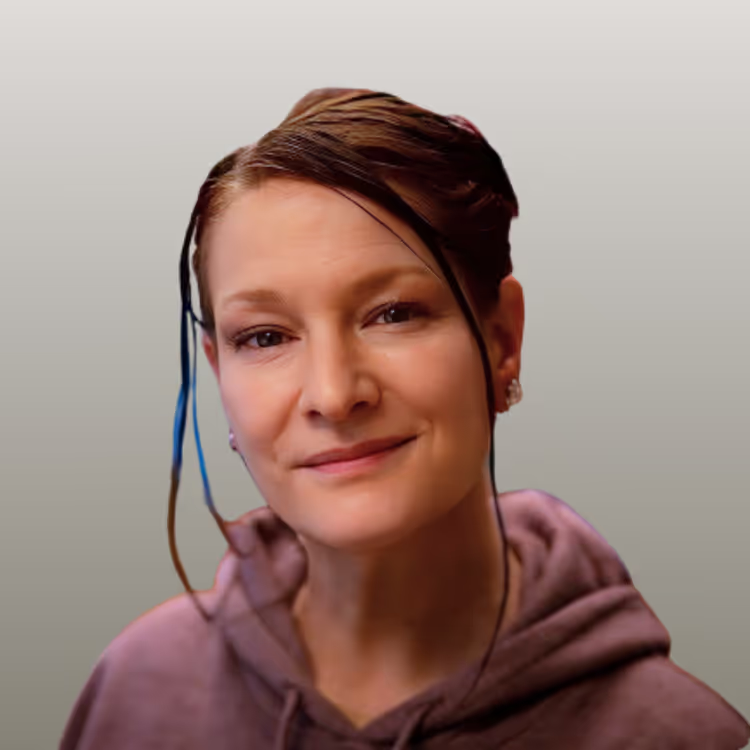
Registered Psychotherapist (Qualifying), practising under the clinical supervision of Amanda Carver, RP
Heather's grief work is story-based and relational: room to tell what happened, who they were and what they meant to you, with music and the body woven in. Rooted in Saulteaux (Anishinaabe)/Red River Métis tradition and a practice of visiting, she puts relationship first. Much of her work also touches grief tangled with life transitions, addiction, and the pressures of school.
If your loss has opened up questions about meaning, faith, or who you are now…

Spiritual Registered Psychotherapist
Sandra makes space for the big questions grief can raise, and for older losses that resurface, through spiritual psychotherapy and inner child work. When grief is keeping you up at night, she's also trained in CBT for insomnia.
If your loss was sudden or traumatic, or grief sits heavy in your body…

Registered Psychotherapist, Clinical Director
Amanda brings an attachment lens, the understanding that grief is the loss of a bond, along with body-aware and yoga-informed approaches. When a loss was sudden or traumatic and keeps replaying, she may use EMDR.
Not sure? Book a free 20-minute consult with anyone on the team, or start with our guide to finding the right therapist.

For some people, sitting face to face with grief can feel like a lot. Walking side by side, with the lake or the city moving past, can make it easier to talk, and to pause when you need to.
Heather offers walk-and-talk sessions downtown or along the waterfront, or sitting on a bench if you'd rather.
Loss rarely arrives on its own. If one of these is part of what you're carrying, you might also explore:
When images of how someone died keep coming back, trauma-focused therapy may be part of the work.
EMDR therapy →Nights are often hardest. There are options that focus on sleep itself.
Insomnia therapy →When heaviness settles in and doesn't lift between the waves.
Depression counselling →When grief is wrapped up in a move, a job, or a new stage of life.
Stress and life transitions →Grief and depression can look alike, and they can overlap. If low mood, hopelessness or exhaustion is getting heavier rather than coming and going in waves, or if you're struggling to eat, sleep or get through the day, please also check in with your family doctor or nurse practitioner.
If you're in crisis
Call or text 9-8-8, the Suicide Crisis Helpline, any time.
Indigenous people across Canada can reach the Hope for Wellness Help Line at 1-855-242-3310, 24/7.
If you or someone else is in immediate danger, call 9-1-1 or go to your nearest emergency department. Vistas isn't a crisis service, and messages may not be answered right away.
There's no threshold you need to reach. People reach out when grief feels too heavy to carry alone, when it's affecting sleep, work or relationships, when it's tangled with guilt or trauma, or simply when they want a space that's just for their loss. A free 20-minute consult is a low-pressure way to see whether it feels right.
Neither. Some people come in the first weeks after a loss. Others come years later, when grief resurfaces around an anniversary, a milestone or a new change. We start wherever you are.
Yes. Estrangement, a pregnancy loss, a death others don't talk about, or grief for the family you needed and didn't have are all welcome here. You don't have to justify your grief to work with it.
No. You decide what to share and when. Some sessions may focus on the story of the loss, and others on sleep, daily life, or who you are becoming now. We go at a pace that feels manageable for you.
You and Heather meet at an agreed spot downtown or along the waterfront, then walk, or sit, while you talk. Before your first walk, you'll plan the route together and talk through privacy, since it's a public space, including what to do if you meet someone you know. If the weather or the day isn't right for walking, you can switch to a video session.
Yes. Heather, Sandra and Amanda all see clients virtually anywhere in Ontario, and some people find it easier to talk about a loss from home.
Heather offers lower rates while she completes her registration under clinical supervision, and each of our therapists keeps some sliding-scale spaces. Amanda and Sandra bill NIHB, IRS RHSP and MMIWG directly. Many extended health plans cover psychotherapy, but coverage varies, especially for a Registered Psychotherapist (Qualifying), so check with your provider before booking.
You don't have to find your way alone.
Whenever you're ready, whether that's weeks or years after your loss, a free 20-minute consult is a gentle place to start.

This page is for general information only and does not replace individualized mental health care. Reading it does not establish a therapeutic relationship. Every person's grief is different, and experiences of therapy vary. Heather Lash is a Registered Psychotherapist (Qualifying) practising under the clinical supervision of Amanda Carver, RP.