
Can Smartphone Use Affect Infant Development? What New Research Reveals

Key Takeaways
- Infants learn through responsive interactions with caregivers.
- Research suggests smartphone distractions can interrupt parent-infant communication.
- Babies appear to notice when a caregiver's attention shifts to a phone.
- Occasional phone use is unlikely to cause harm.
- Consistent moments of presence and attunement remain important for healthy development.
Written by a research contributor and reviewed for general accuracy by a Registered Psychotherapist.
How do babies learn from their parents?

Infancy is a unique and formative time in our lives. We begin to learn the foundational components of being human while relying completely on our parents or caregivers for support. Infancy is also one of our most sensitive periods, as the brain is rapidly developing and malleable to environmental influences. During this period, we learned our native languages and the basic rules of social interaction by watching and responding to our parents. We examined how interactions begin, how back-and-forth communication works, and how interactions end.
At the same time, a baby’s growth and survival are influenced by how effectively parents meet their physical and emotional needs. Humans have evolved strong attachment systems that support this process, helping infants learn whom they can turn to for comfort and protection. Infants whose parents consistently respond to their needs with warmth, sensitivity, and timely attention are more likely to develop secure attachments. When caregiving is inconsistent or unresponsive, however, babies learn that their needs will not always be met. In response, they might attempt to calm themselves or intensify their behaviour to regain attention.

In short, development does not “happen” to infants. It is an interactive process in which they learn to adaptively engage with their environment with close parental support. Babies are active participants, constantly adjusting their behaviour based on the responses they receive.
What is the Still-Face Experiment?
This sensitivity to caregiver responses was famously demonstrated in the Still-Face Paradigm, developed by Tronick and colleagues in 1978, where mothers briefly stopped responding to their infants during play. They remained silent and were unresponsive to their children for two minutes during play sessions. Babies tried to re-engage their parent by smiling, pointing, and vocalizing. Upon failure, they began turning away, crying, and losing posture.
The Still-Face Paradigm revealed that we understand the bidirectional nature of human interaction from a very young age and are keenly aware of disruptions to these processes. When babies sense a pattern of unresponsiveness from their caregivers, they adapt their reactions accordingly.
What happens when parents use smartphones around infants?
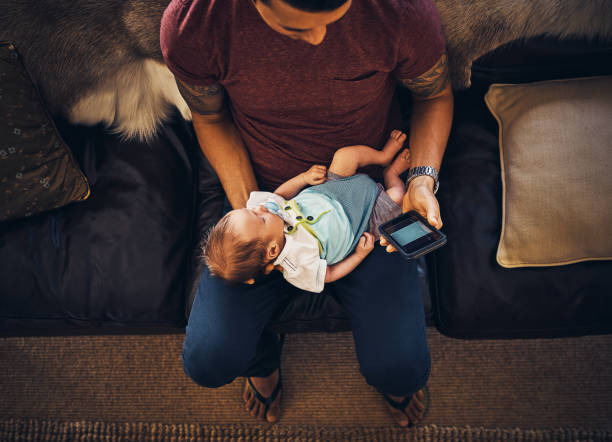
Today, parents are juggling more distractions than ever before. In many Western societies, working parents often shoulder the responsibility of raising children with limited support from extended family or community networks. Balancing the demands of a job, caring for an infant, and maintaining relationships is no small task. Understandably, many parents turn to technological fixes -- remote work, social media, and so on -- to manage competing responsibilities while caring for their young child(ren).
As smartphones have become ubiquitous, they are now not only socially acceptable but often essential for staying connected to work, social networks, and everyday entertainment.
Smartphones appear to be accessible and efficient tools for busy parents at first glance, but their use may carry adverse consequences for their child’s development. If “still-faced” mothers in Tronick’s experiment managed to induce distress in their babies after only two minutes of unresponsiveness, what might the effects of frequent smartphone distraction -- when parents are physically present but mentally elsewhere -- have on infants sitting nearby?
Dinzinger et al. (2025) sought to address this question in their study on maternal smartphone use and infant-parent dynamics. Researchers observed mothers and infants in a modified still-face paradigm comprising five phases. First, mothers were instructed to play with their child, and then to stop engaging with them -- akin to the still-face condition in the 1978 experiment. In the subsequent smartphone phase, mothers completed a smartphone crossword puzzle and were instructed to use their device as they usually would. Importantly, they were allowed to maintain physical, verbal, and visual contact with their child throughout this phase. After both the smartphone and still-face interruptions, mothers resumed full engagement with their child.
The results showed that smartphone use disrupted infant-parent interactions in ways that closely resembled the classic still-face effect. In both the still-face and smartphone conditions, babies had increased heart rates and reduced stress regulation compared with normal play. Mothers also dramatically reduced eye contact, vocalizations, and physical touch with their child during smartphone use, despite being allowed to maintain contact. Even then, babies still recognized their caregivers’ distraction and struggled to remain calm and regulated.
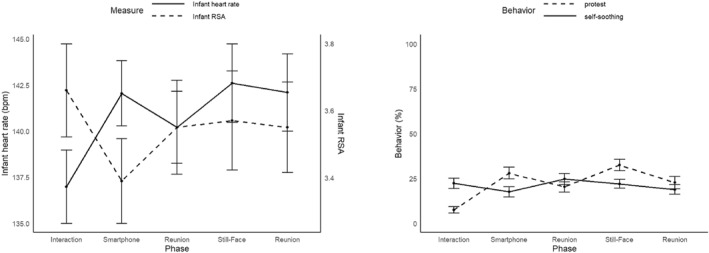
Interestingly, infants displayed less self-soothing behaviour during smartphone interruptions than under still-face and normal conditions, suggesting that phone distraction may be confusing and difficult for babies to adapt to. Smartphone interruptions were also associated with disrupted co-regulation. Motors and infants were no longer physiologically adjusting to one another in real time. This was unlike the still-face condition, where infant stress increased as maternal emotional arousal decreased (and vice versa). These findings indicate that smartphone distractions cause asymmetric regulation, consistent with the idea that digital distractions interfere with responsive caregiving.

Nonetheless, the still-face condition remained more distressing overall. Infants protested more, used more self-regulatory behaviour, and showed stronger stress responses than in the smartphone interruption. This means that both situations are upsetting, but may be experienced differently by infants. The still-face interruption is socially and emotionally ambiguous, whereas smartphone use is a visible cause of unavailability. Altogether, these findings support the idea that parental smartphone use functions as a less potent “still-face” by interfering with infants’ ability to regulate stress and rely on their caregivers for emotional support.
On a more reassuring note, the study found that mothers’ everyday smartphone habits were not associated with overall infant engagement, indicating that day-to-day smartphone use does not meaningfully reflect chronic disengagement. Parents need not panic: brief or infrequent smartphone use is unlikely to permanently harm a child. However, other research suggests that repeated smartphone interruptions may lead infants to spend considerable time seeking attention, at the expense of play and exploration, with potential negative consequences for self-regulation development (Mikić et al., 2025).
Should parents be worried? What does the research actually say?
Overall, it is important to remain present when interacting with your baby -- when possible, the phone can wait. This is not to deny the very real pressures that lead parents to rely on their devices, but rather to examine the long-term implications of frequent distraction during this sensitive period. Repeated disruptions in caregiver availability may shape how children learn to regulate emotions and form relationships later in life. Toledo-Vargas et al. (2025) found that higher parental technology use was correlated with negative outcomes for children. They had poorer cognition, attachment problems, increased emotional and behavioural difficulties, and difficulty regulating their own screen time. Furthermore, parents with higher levels of technology use exhibit lower attachment quality with their infants and greater hostility toward their parental role (Alvarez Gutierrez & Ventura, 2021).

Still, parental smartphone use is not necessarily a personal failure but rather a consequence of living in a demanding, technologically saturated society. Greater psychoeducation, parental interventions, and therapeutic spaces can help parents reflect on their digital habits, manage external pressures, and strengthen moments of attunement with their children. At the same time, broader social policies that reduce parental overload and provide evidence-based support are needed.
Mindful use of technology, combined with stronger community support systems and workplace flexibility, can help parents be present and consistent with their children.
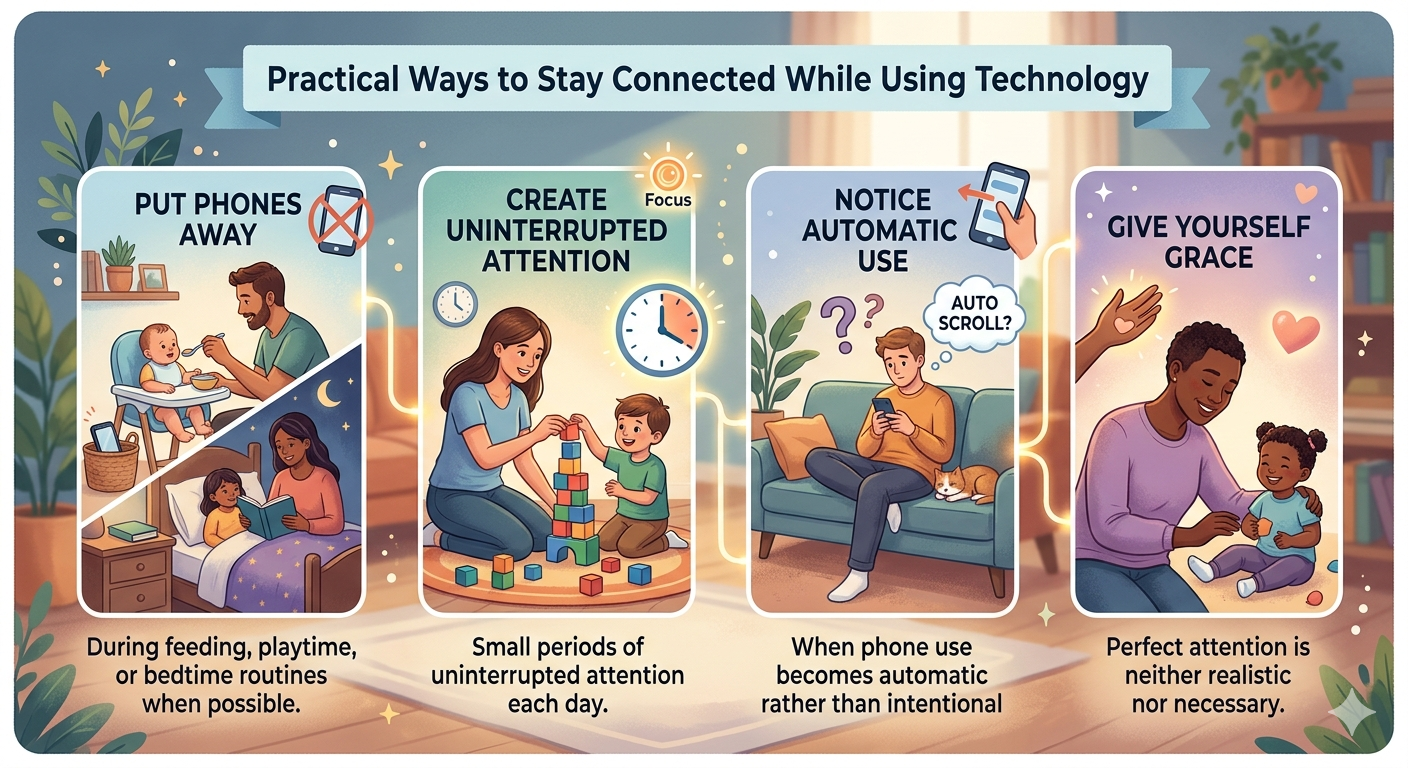
Parents do not need to be perfectly attentive every moment of the day. Development is shaped by thousands of interactions over time, not occasional distractions. What matters most is a pattern of responsiveness, repair, and connection. In a world full of competing demands, even small moments of attuned presence can have a meaningful impact on a child's development.
Research suggests that infants thrive through consistent moments of connection, attunement, and responsive caregiving. While occasional smartphone use is unlikely to harm development, many parents benefit from support as they navigate the pressures of modern family life. If you're looking for psychotherapy, parenting support, or guidance around stress, relationships, or attachment, contact Vistas Psychotherapy & Wellness to learn more about our services in Toronto, Ottawa, and virtually across Ontario.
Emilie Verno-Lavigne, B.A., is a research contributor at Vistas Psychotherapy & Wellness, focusing on child development, attachment, and family psychoeducation.
This post offers general information for educational purposes. It is not therapy, does not replace individualized mental‑health care, and does not establish a therapeutic relationship. If you're experiencing distress or need support, please connect with a qualified mental‑health professional in your area. If you are in immediate distress or at risk of harm, in Canada you can call or text 9‑8‑8 (Suicide Crisis Helpline) or call 9‑1‑1, and internationally you can visit FindAHelpline.com to locate free, confidential support services available in your specific country and language.
Frequently Asked Questions
Can phones affect babies?
Research suggests that frequent smartphone distractions may interrupt parent-infant interactions, though occasional use is unlikely to cause harm.
Does parental phone use affect attachment?
Some studies suggest that repeated disruptions in responsiveness may affect attachment quality, though many factors influence attachment development.
What is the Still-Face Experiment?
The Still-Face Experiment demonstrated that infants quickly notice and react when caregivers become emotionally unresponsive.
Should parents stop using smartphones around their babies?
Most researchers do not recommend eliminating smartphone use entirely. Instead, they emphasize maintaining regular periods of responsive interaction and connection.
References
Alvarez Gutierrez, S., & Ventura, A. K. (2021). Associations between maternal technology use,
perceptions of infant temperament, and indicators of mother-to-infant attachment quality.
Early Human Development, 154, 105305. https://doi.org/10.1016/j.earlhumdev.2021.105305
Dinzinger, A., Greif, E., Speyer, L., Wittling, R. A., Brisch, K. H., Priewasser, B., & Markova,
G. (2025). Tiny Screens, Big Impact: Effects of Maternal Smartphone Use on Maternal
and Infants' Physiological and Behavioral Stress and Interaction Dynamics. Infancy: The
Official Journal of the International Society on Infant Studies, 30(6), e70056.
https://doi.org/10.1111/infa.70056
Mikić, A., Bergmann, S., Perejoan Martí, G., & Klein, A. M. (2025). "Just a second, mommy's
here": the impact of mothers' smartphone use on children's affect regulation and the
quality of mother-child interactions. Frontiers in Psychology, 16, 1596219.
https://doi.org/10.3389/fpsyg.2025.1596219
Toledo-Vargas, M., Chong, K. H., Maddren, C. I., Howard, S. J., Wakefield, B., & Okely, A. D.
(2025). Parental Technology Use in a Child's Presence and Health and Development in
the Early Years: A Systematic Review and Meta-Analysis. JAMA Pediatrics, 179(7),
730–737. Advance online publication. https://doi.org/10.1001/jamapediatrics.2025.0682
Tronick, E., Als, H., Adamson, L., Wise, S. & Brazelton, T. B. (1978). The Infant's Response
to Entrapment between Contradictory Messages in Face-to-Face Interaction. Journal of
the American Academy of Child Psychiatry, 17(1), 1-13.